.jpg)

Enzymes in Animal Feed
Focus: Phytase, Protease & Multi-Enzyme Strategies
Optimizing Nutrient Digestibility & Animal Performance

Phytase
Releases phosphorus from phytate, improving nutrient utilization and reducing environmental impact.

Protease
Enhances protein digestibility by breaking down complex proteins into absorbable amino acids.
.png)
Multi-Enzyme
Synergistic combinations for comprehensive feed optimization and gut health.
Why Enzymes Matter in Monogastric Nutrition
Understanding the role of exogenous enzymes in animal feed optimization
The Challenge
Plant-based feeds contain anti-nutritional factors that limit nutrient absorption:
Phytate binds phosphorus, making it unavailable
NSPs increase digesta viscosity
Protease inhibitors reduce protein digestibility
Endogenous enzymes are insufficient in young/fast-growing animals
Key Outcomes
+15%
Phosphorus availability
+8%
Amino acid digestibility
-30%
P excretion
-25%
Feed cost
The Solution
Exogenous enzymes target specific substrates to:
85%
Phytate hydrolysis
Digestibility improvement
20%
Energy improvement
75%
Scientific Evidence
Exogenous enzymes target specific substrates to:
Key Finding: Phytase consistently improves P availability and mitigates phytate's anti-nutritional effects
Source: PMC4368368 | Adeola & Cowieson, 2011
85%
Phytate hydrolysis
20%
Energy improvement
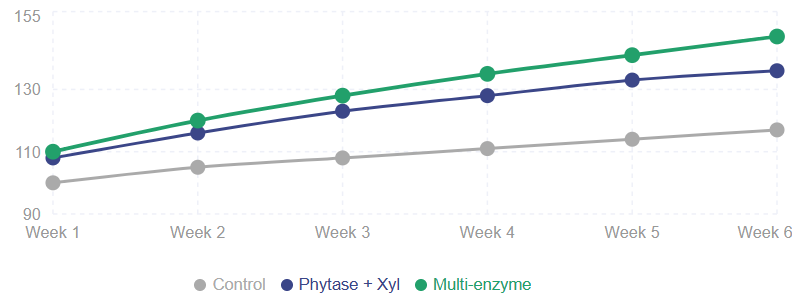
Multi-Enzyme Programs: Practical Outcomes
Broiler and pig performance with phytase + xylanase + protease combinations
Broiler Performance (Corn-Soy)
+8.5%
ADG Improvement
-4.2%
FCR Reduction

Performance Trends
FCR:
1.62 → 1.55
ADG: